Foundation Finds Labeling Issues with Four Soy Sauces|消基會抽查市售醬油 15款中4款不合格


加入公視會員,
按讚收藏你關注的報導
發布時間:
更新時間:
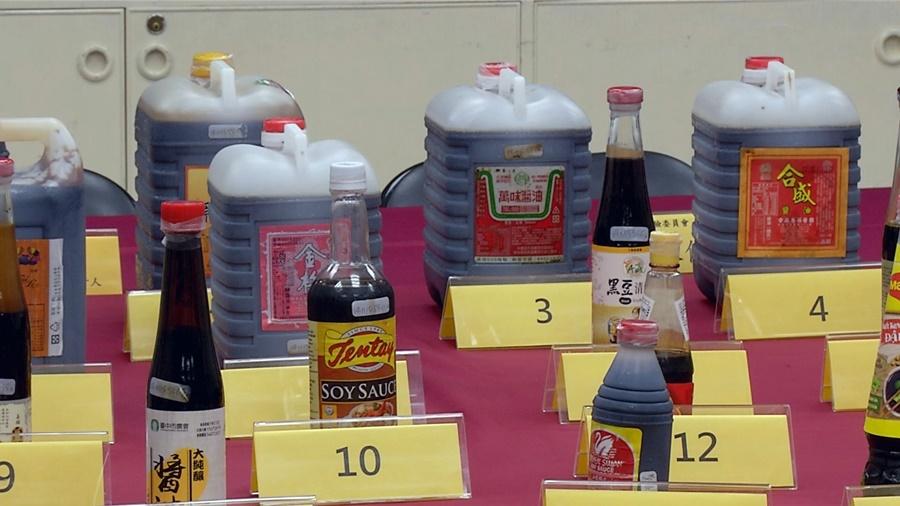
The Consumers' Foundation recently tested 15 soy sauces produced in Taiwan and abroad, and found that four had labels that did not conform to regulations. The foundation reminds violators that they need to make immediate improvements to avert fines of up to NT$4 million.
Many people like to add soy sauce to their food. However, what is stated on the labels of soy sauce bottles may not actually conform to what's inside. Under current regulations, soy sauce product labels are required to state whether the product is "rapid fermented," "hydrolyzed," or "brewed." If the label indicates "brewed," the product must have a total nitrogen level of at least 0.8 grams per 100 milliliters. The Consumers' Foundation recently tested 15 soy sauce products and found that four had labels that did not comply with regulations. One product's 3-MCPD content exceeded the limit.
It was over the limit by two to 2.5 times. We think the so-called rapid fermented method was used, which entails using acid and then hydrolyzing soybeans in place of using enzymes or other fermentation methods.
The maximum limit for the 3-MCPD content of soy sauce and soy sauce-based seasonings is 0.4 milligrams per kilogram. Australia, New Zealand, and other countries have a more stringent limit, while the United States and Canada have a looser limit. Toxicologists say the effects of 3-MCPD on the body are not clear, but the World Health Organization has already classified it as a "highly possible carcinogen." Moreover, soy sauces have high levels of sodium, which is not good for the body.
Animal testing showed that a large dose of 3-MCPD has reproductive toxicity and neurotoxicity. People shouldn't ingest more than 100 to 150 cc a day. We probably won't reach this level in our daily lives.
A fine of NT$40,000 to NT$4 million can be issued if the label says "brewed" and the total nitrogen level is insufficient. Three labels failed to identify the manufacturing process, which violates Article 22 and can incur a fine of NT$30,000 to NT$3 million.
The foundation says manufacturers should supervise themselves and label their products honestly, as well as enact strict controls starting at the source, to avert fines. The public is advised to study product names as well as ingredient lists to avert buying products of substandard quality.
在享用美食同時,有些民眾可能會蘸點醬油增加風味,但這些醬油內容物,可能和包裝標示不符。按照規定,醬油產品在包裝處,要標示速成、水解或釀造等字樣,如果標示釀造,總氮量必須要達到每百毫升0.8公克以上,但消基會抽查市售15件商品,有4件標示不合格。而且其中一款產品的3-單氯丙二醇含量超標。
消基會檢驗委員會召集人 凌永健表示:「(超標)2到2.5倍之間,(推測)利用所謂的速成的,就是利用酸…利用酸,然後來水解大豆,而不是利用酵素,或是一般的這個發酵方法。」
台灣規定,醬油和以醬油為主的調味製品,3-單氯丙二醇含量上限,是每公斤0.4毫克,澳洲、紐西蘭等國限制更嚴格,但美國、加拿大規範較輕。毒物科醫師說明,3-單氯丙二醇對於人體的危害,目前還沒有明朗化,但世衛組織已經列為「極可能致癌」,而且醬油鈉含量很高,對人體無益,建議少食用。
林口長庚毒物科主任 顏宗海表示:「動物實驗也證明說,3-單氯丙二醇,它的劑量大的話,也會有生殖毒性,也會有神經毒性,一天可能不能超過100到150c.c.,我們在日常生活中,應該不可能吃到這個量。」
消基會發行人 徐則鈺表示:「標示為釀造,氮含量不足,是可以處4到400萬的罰鍰,3件完全沒有標示製程的,這個是違反22條的規定,可以處3到300萬元的罰鍰。」
消基會建議業者,要落實自主管理,無論是釀造或調和醬油,都應該誠實標示,並從源頭開始做好把關,否則最高可罰3、4百萬元罰鍰。而民眾在購買時,除了查看品名之外,也要特別注意成分內容,避免買到品質不良產品。