No "Agreement" Reached at Second Trump-Kim Summit|川金二會無具體協議 川金三會未知數


加入公視會員,
按讚收藏你關注的報導
發布時間:
更新時間:
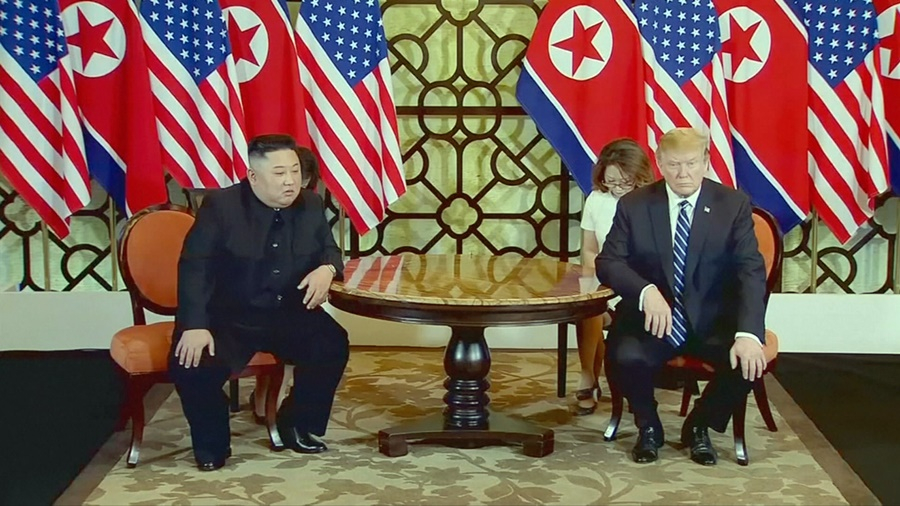
The much anticipated second summit between United States President Donald Trump and North Korean leader Kim Jong-un on Feb. 28 collapsed without any specific agreements reached, and it can even be said the two sides parted on bad terms. It remains unknown whether a third summit will be held. Scholars say this outcome may end up bolstering the U.S.-China relationship and produce a certain amount of impact on the U.S.-Taiwan relationship.
The second summit between United States President Donald Trump and North Korean leader Kim Jong-un, which took place on Feb. 28, collapsed before the two sides reached any specific agreements, much to the surprise of foreign policy experts. They say this outcome may end up bolstering the U.S.-China relationship because there is a very strong possibility that the U.S. will have to depend on China in the future to indirectly assist with U.S.-North Korea negotiations.
If the United States begins further improving its relationship with China and depending on China to resolve the North Korea issue, the U.S.' support for Taiwan will definitely become limited.
Taiwan Association of International Relations President Wang Kao-cheng adds that Trump is currently besieged by the Russian interference in the 2016 U.S. elections scandal, and he is also seeking re-election. His popularity is sliding domestically, and therefore he is hoping to achieve foreign policy breakthroughs. However, improvements to the U.S.-China relationship may have a negative impact on the U.S.-Taiwan relationship. Though the second Trump-Kim summit collapsed, some scholars say this could be a strategy if analyzed from a negotiating tactics standpoint.
I don't believe agreements have to be reached during international negotiations. Even if you return empty-handed, that doesn't necessarily mean it was a failure. No agreements were reached during the second Trump-Kim summit, but at least both of them received international attention.
National Chengchi University diplomacy professor Lee Ming says for Japan, which is greatly affected by the North Korean threat, the collapse could prove to be a relief because Trump did not make too many concessions. Wang adds the two sides have differing views on why the talks collapsed, but North Korea did not say anything bad about the U.S., which shows Kim still maintains goodwill. Further observation on how the relationship develops is needed.