NHRI Develops Broad Spectrum Enterovirus Vaccine|注射型腸病毒A71型疫苗 最快後年上市


加入公視會員,
按讚收藏你關注的報導
發布時間:
更新時間:
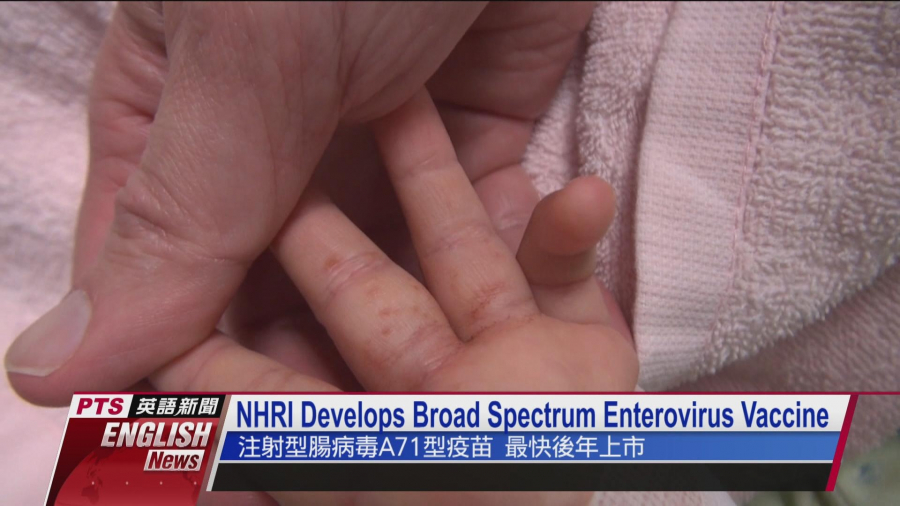
A major breakthrough has been made in the development of an enterovirus vaccine. Researchers at National Health Research Institutes spent three years developing a "broad spectrum vaccine" which can protect against at least six types of the enterovirus. Human trials are scheduled to begin by year end. Meanwhile, an enterovirus vaccine administered through injection will be available in two years' time.
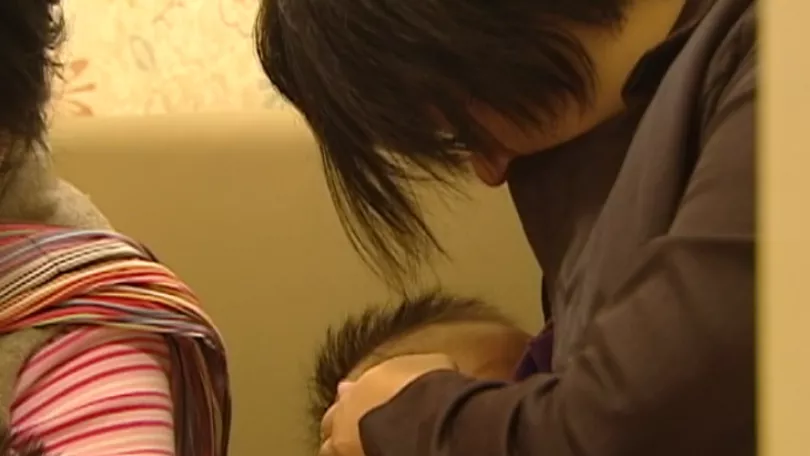
Enterovirus infections often strike children under the age of five. In the future, they may be able to avoid infection by receiving a nasal vaccine. Two doses will provide protection against at least six types of the enterovirus.
Once it is administered, it will cause an immune response in the mucous membrane. Children can receive protection during the newborn stage without excessive risk.
The broad spectrum enterovirus vaccine was developed by National Health Research Institutes researchers over a three-year period. They discovered that after the human body is infected with the enterovirus, the virus will create "non-structural proteins." If these proteins can be discovered and annihilated in time, the virus won't be able to replicate itself, effectively killing the virus. Tests have already been conducted on animals. The vaccine can protect against enterovirus A71 and coxsackievirus types A16, A10 and A6. Meanwhile, an enterovirus A71 vaccine administered through injection is also under development, and currently in the second stage of clinical trials at National Taiwan University Children Hospital.
The trial involves 500 to 1,000 children. It appears the amount of antibodies they produce after receiving the vaccine is quite high. Moreover, nearly 90 some percent, close to 100 percent, produce antibodies.
The hospital says the trials should be concluded before the end of next year. After that, pharmaceuticals will apply for drug certificates from the Food and Drug Administration. The vaccine will hit the market in two years' time at the earliest. Human trials are scheduled to begin by year-end for the NHRI's broad spectrum enterovirus vaccine, and the vaccine may be available in four years' time at the earliest.