Groups Criticize Ministry's Foreign Labor Indicator|移工近68萬創新高 指標"穩健"挨批


加入公視會員,
按讚收藏你關注的報導
發布時間:
更新時間:
Taiwan currently has nearly 700 thousand foreign workers, which is a record high. While the official "foreign labor warning indicator" remains at "stable," and the policies do not need adjusting. In response, some labor groups say the government is too slow to react.
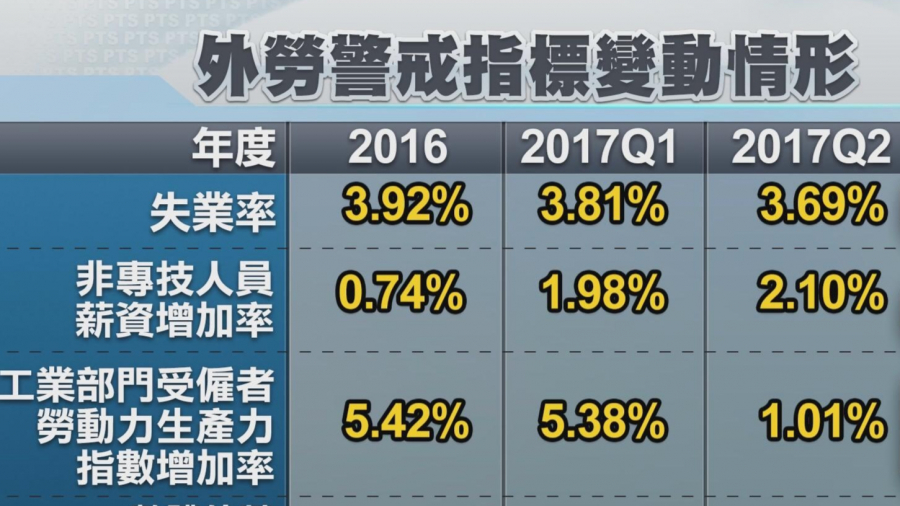
The number of foreign laborers working in Taiwan is growing. As of the end of March, there were 679,000 foreign workers in Taiwan. However, the Ministry of Labor's "foreign labor warning indicator" is still flashing "stable." The unemployment rate, unskilled worker salary, industrial sector employee labor productivity index and rate of foreign workers with unknown whereabouts during the first and second quarters of 2017 were all better than the levels in the same period the previous year.
The manufacturing industry's 3D (dangerous, dirty, difficult) industry remains the biggest employer of foreign workers, as local people are generally unwilling to do this type of work.
The foreign labor warning indicator was launched in 2016, and indicates whether foreign labor policies need to be adjusted. However, labor organizations say the indicator is too slow to react. For example, it was "stable" when the foreign laborer population was 200,000. Now, there are over 600,000 foreign workers and it remains at "stable." They say this shows industries only want to pay low salaries, and therefore it will be impossible for them to transition.
Our current foreign labor policy only meets the needs of employers who are unwilling to transition. These employers only want to use low-salaried workers. The Ministry of Labor should not be using this type of method. The unemployment rate of 3.66 percent appears to be a new low, which is allowing it to dodge reviews of its overall foreign labor policy.
Labor groups are also against the Ministry of Labor's policy of unlinking the number of introduced foreign workers and the unemployment rate. They say, what happens if there is a job that pays NT$60,000 but no one wants to do it, and only foreign workers are willing to do it. If the employer ends up paying the foreign worker the basic wage, there is no way labor conditions will ever improve.