PROTESTS AGAINST TSAI'S LONG-TERM CARE PLAN|不滿長照2.0分配不公 私人業者北上抗議


加入公視會員,
按讚收藏你關注的報導
發布時間:
更新時間:
Back in Taiwan, long-term care groups from seven counties and cities expressed dissatisfaction with President Tsai's long term elderly care plan. Together with several hundred other groups, they took to the streets to protest. They want the government to make amendments to the long term care plan and remove the parts that they feel are unreasonable.
On Nov. 20, long-term care industry members from all over Taiwan protested in Taipei. Under the current long-term care policy, those who are seriously incapacitated and live at home can apply for 90 hours a week for a caregiver to come and help in the home to help with turning, washing and moving. Seventy percent of the fees for this are met by the government, with a ceiling of NT$12,600. However, in the future, if these elderly or incapacitated people are in long-term care facilities, they will not receive any subsidies.
==MR. CHEN family representative==
People have to be severely incapacitated to be put in a care facility, those who have mental incapacity, right? For most people, if you give them a subsidy of NT$11,800 with the 30 percent off, I don't think that is excessive.
Within five years, current small scale private residential care facilities must become foundations. Non-governmental organisations feel that this system will cut out over 1,000 small private residential care homes.
==WU TI-MING Chair, Taipei City Area Elderly Care Organisation==
The government version allows the current small-scale organisations to continue to exist, but many rent property, there will be all sorts of new decrees to adjust to and if you want to move and set up in another place, you can't do that.
==CHEN SU-CHUN Dep. Dir. MOHW Social and Family Affairs Admin.==
There isn't a stipulation that they have to change within 5 years unless they expand to move, then they have to do so according to the new rules.
The MOHW said that about 60 percent of parents live with adult children. Severely incapacitated individuals who need institutional care from low-income families are currently given NT$18,600, but most families did not receive any subsidies.
TRANSLATED BY:CLARE LEAR
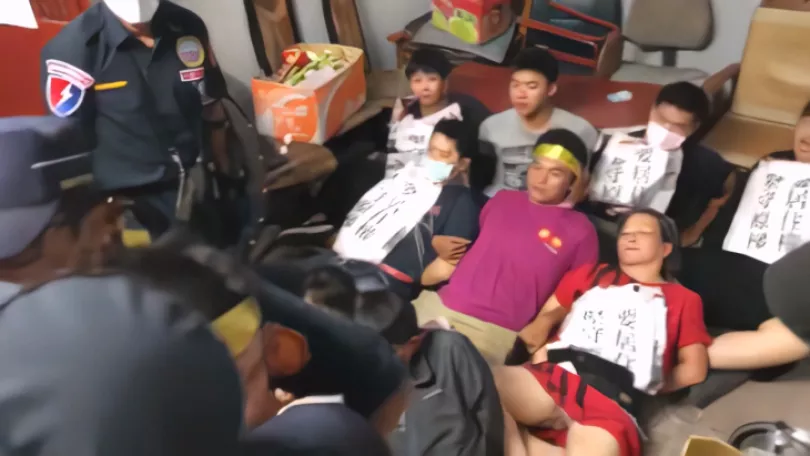
綁著抗議頭巾,來自北中南上百位民眾及長照業者、下午走上凱道,抗議長照2.0分配不公平不合理,因為依照現行長照政策,住家裡的重度失能者,每月能申請最多90小時,請居服員到家中於協助失能者翻身、洗澡等,其中70%費用由政府補助,上限為1萬2600元,但未來如果住進安養機構,重度失能老人將不再有這些補助。
==家屬代表 陳先生==
送到安養機構裡面去的
可以講都是重度的
失能失智的這些人對不對
一般戶你來補助給他們
1萬8千塊的話打個七折
我相信這個也並不過分
另外,長照法第22條明訂,照顧重度失能者的住宿型長照機構,限制只有財團法人與社團法人才能經營,一般的私人及公司在未來都不能經營,而現有小型私人住宿型長照機構,在長照法實施5年內也必需轉型為法人,民間團體認為,這樣的制度會讓現存1000多家私人住宿型長照機構都無法生存。
==台北市社區銀髮族長期照顧發展協會理事長吳第明==
政院版他有說讓現在小型機構
回到原來法令讓你活下來
但是你面臨租約
你面臨種種法令調升之後
你想要異地再設立的時候
你就設不出來了
==衛福部社家署副署長 陳素春==
沒有說5年(轉型)了
除非他有擴充或者是遷移
那就要重新
他就依新的規定來走
衛福部表示,目前有六成父母與子女同住,為了盡量讓長輩在家而不要到機構,才補助在家照顧,如果必須送機構的重度失能長輩,低收戶與中低收戶,現行有補助每月18600元,但一般家庭沒有補助,未來如果財政資源充裕,會考量漸進式擴大補助。
記者 吳雅瑜 謝其文 台北報導