Premier Indicates Support for Raising Basic Wage|工資審議將召開 賴揆:月薪時薪都該調


加入公視會員,
按讚收藏你關注的報導
發布時間:
更新時間:
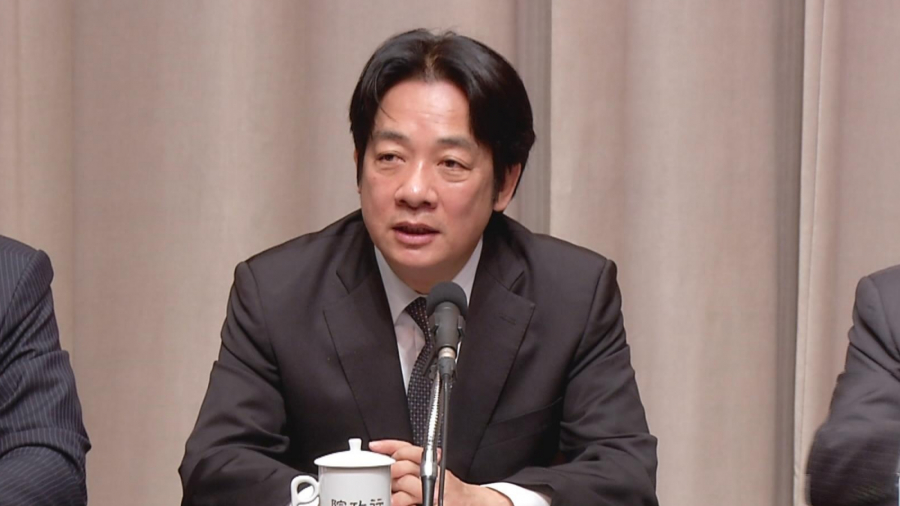
The basic wage review committee is scheduled to meet in mid-August. During a recent interview, Premier William Lai said the basic monthly wage and the basic hourly wage should both be raised. He added the domestic growth rate has been over 3 percent for four straight quarters, and he believes the committee will consider the economic situation when making its decision.
The basic wage review committee is scheduled to meet in mid-August. On Aug. 1, Premier William Lai gave an interview during which he spoke about improving Taiwan's low-salary situation. He said both the basic monthly wage and the basic hourly wage should be raised. The public took this to mean the basic monthly wage could be raised from NT$22,000 to NT$23,000, while the basic hourly wage could be increased from NT$140 to NT$150 or possibly even NT$155 for a change of at least 7 percent. Labor groups approve of any increase in the basic wage.
We hope that Premier Lai has really perceived of this problem and the basic wage should be substantially increased when the time comes. This will show that Taiwan is no longer a low wage country on the one hand, and help Taiwan's wages to slowly return to their original place on the other hand.
What are the chances that salaries will be raised? Based on the economic situation, the economic growth rate in the third and fourth quarters last year were 3.18 percent and 3.42 percent, respectively. In the first quarter this year, it was 3.02 percent. The Directorate-General of Budget, Accounting and Statistics has raised its growth rate forecast for the second quarter to 3.29 percent. This means there will be four consecutive quarters with growth of over 3 percent. Taipei Chamber of Commerce Director-General Wang Ying-chieh served as a member of the basic wage review committee for seven to eight years. He says companies have always opposed wage increases. However, this year is an election year, and improving the low-wage situation requires not only increasing the basic wage, but also paying attention to repercussions.
If costs increase, they are passed on. If they are passed on, it will depend on whether consumers can accept them. If consumers don't accept them, the product market will shrink. If it shrinks, in the end, people could end up losing their jobs.
The Executive Yuan's current position is to raise both the monthly and hourly basic wage. Companies say this may result in cost transfer effects, while labor groups are in favor of such a move. However, they urge the government to formulate a minimum wage law that clearly stipulates compulsory reference indicators, such as living costs and wage standards, to really protect the rights and benefits of workers.