Full 43-minute Transcript of Call by Puyuma Driver Released |普悠瑪通聯曝光 司機一路求援43分鐘


加入公視會員,
按讚收藏你關注的報導
發布時間:
更新時間:
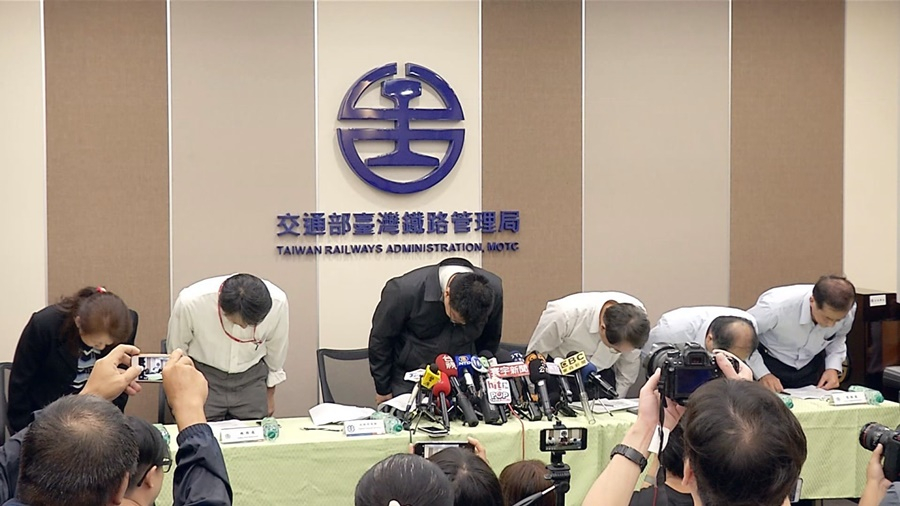
Eighteen people were killed when a Taiwan Railways Administration Puyuma Express train derailed on Oct. 21. On Oct. 24, the TRA held a press conference. It explained that records showed the driver had failed to report he had disabled the automatic train protection system, leading to the excessive speed that caused the accident. However, an Executive Yuan investigatory task force that reviewed the records found the driver had informed dispatchers about disabling the ATP system, and the train began experiencing power system problems after passing Daxi Station. In related news, the resignation of TRA Director-General Lu Chieh-shen have been accepted.
On Oct. 21, a Puyuma Express train traveling at a high speed collided with a platform and derailed. Train communication records show the driver had been asking for assistance long before the accident occurred. At 4:13 p.m., the train was en route to Daxi Station. The driver reported the speed was not as expected, and a dispatcher told him to lower the pantograph. At 4:19 p.m., dispatchers asked if the train could move, and the driver responded in the affirmative, but that it was gliding and did not have motive power. At 4:22 p.m., the driver again reported a lack of motive power, and dispatchers responded, "If you don't have motive power, then at least coast into Guishan Station." At 4:25 p.m., the driver asked to stop the train at Toucheng Station, and both sides tried to resolve the motive power issue as the train traveled. The dispatcher asked the driver to stick his head out to look at the train's side lights, and the driver responded, "How can I stick my head out?" The dispatcher asked how this situation arose, told him to continue driving and report back if he encountered any problems, and asked what the next station was. The driver responded it was Yilan Station, and the dispatcher told him to continue driving and asked, "Are you running behind schedule?" The driver responded, "Yes, I'm running late and now I have no motive force again." The dispatcher then told the driver that they would try to switch trains, but he should continue driving as long as he could. At 4:46 p.m., the driver mentioned the automatic train protection system had been disabled, and the dispatchers asked, "Will disabling it resolve the problem?" The driver responded that the speed was back, and the dispatchers told him, "We'll send the conductor over to you and you teach him how to reset it." This was in reference to restarting the motive power. At 4:48 p.m., as the train was preparing to enter Xinma Station, the driver reported tripping issues even after the restart. The dispatcher called him, but the driver did not respond. Two minutes later, the train derailed and several cars overturned. The communication records show the driver had reported disabling the ATP system, and the dispatchers had agreed. This was inconsistent with Taiwan Railways Administration's explanation a day earlier, when it said the driver had failed to report disabling the ATP system.
Taiwan Railways Administration kept saying the driver had failed to report it. We don't know if it installed (remote) systems (to monitor Puyuma-class trains). It kept on repeating the driver did not report the situation to the control center, but the facts show he did.
The Taiwan Railway Labor Union says a review of the communication records showed dispatchers knew the ATP system had been shut off. However, the records don't show the reason why it was turned off. The union says there are inconsistencies with the TRA's official explanation and the facts, and it's not true that the so-called new trains don't have remote monitoring systems. All commuter trains commissioned after Puyuma-class trains have remote monitoring systems. The TRA previously said it would cooperate with the Executive Yuan's investigatory task force and the TRA would not make any statements.