Monsoon brings "wind-drift sand" to Taroko Nat'l park /東北季風帶起 花蓮立霧溪河床"風吹沙"


加入公視會員,
按讚收藏你關注的報導
發布時間:
更新時間:
As the northeast monsoon moves in, rocks and sands from Hualien's Liwu Creek riverbed would often be blown to the Taroko national park and Shioulin Township, creating a unique phenomenon that looks almost like a sandstorm. However, local residents are pretty used to it, they call it the "wind drift sand", though inconvenient but no one has yet come to a solution to this problem.
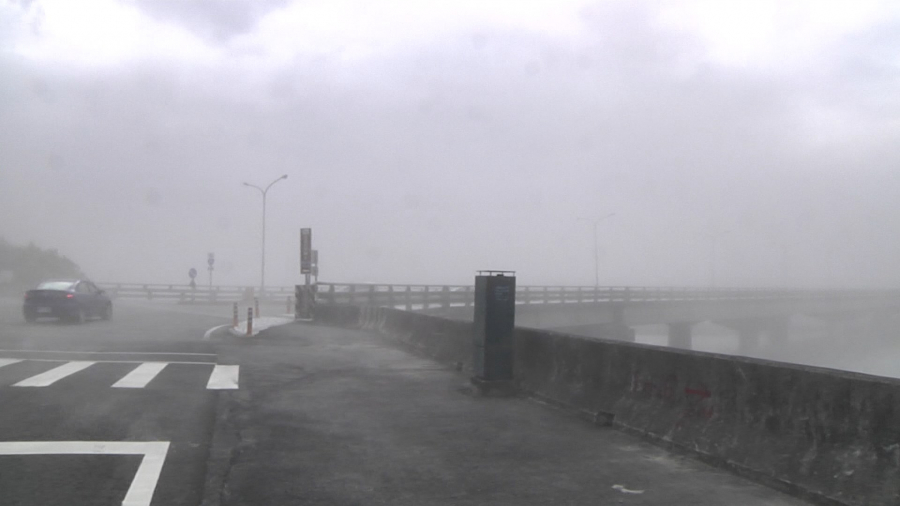
When you visit the estuary of the Liwu Creek in Hualien's Shioulin Township, the sky is foggy. The sand and rocks over the riverbed were blown up by strong occasional monsoons. Although local residents are used to it, but it has been regarded as an inconvenience.
==MR. WANG, Dredging Company==
It's no use to build a windbreak forest. Here is the area reserved for running water, you cannot plant anything, even if you build embankments here.
==MISS LIN, Sioulin Township Resident===
Every evening is the time for me to clean up because things were covered up by sands. House interior has the same problem, even if you closed up all doors and windows, sands would blow in from gaps.
The residents pointed out, it is the unique phenomenon at the Liwu Creek estuary. It has been affecting the tourism to the Taroko National Park.
==CHANG TENG-WEN, Taroko Nat'l Park Headquarters Deputy Dir.==
Air quality is OK, only the air sediment concentration is a bit higher. For the visitors with respiratory problems, we suggest them to wear masks during this time of year at the Taroko.
According to the Central Weather Bureau data, under the influence of occasional monsoons, every open area in Taiwan had number nine to eleven gust winds on the Beaufort scale. Especially for the riverbeds in the eastern region, if there was no rain, the phenomenon of flying sands and foggy sky will appear.
TRANSLATED BY:ANTHONY LIN
來到花蓮秀林鄉的立霧溪出海口,四處都是霧茫茫一片,因為河床上的沙石,被強勁的東北季風帶起,附近的民眾雖然習慣了,但生活上還是相當不便。
==疏濬業者 王先生==
做防風林也沒有用啊
而且你這個是行水區
你沒有辦法種植
你做坡駁坎那些也沒有辦法
==秀林鄉居民 林小姐==
每天到晚上就是要清了
因為它都是沙子
你裡面也一樣
門窗全部關起來一樣
它那個沙子還是會從縫隙進來
居民強調這是立霧溪出海口的特有景象,每年入秋東北季風起,河床上的沙石就會被吹的漫天蓋地,這對太魯閣國家公園內的觀光也有不小影響。
==太魯閣國家公園管理處 副處長 張登文==
空氣品質是沒問題
只是含沙量比較高一點
如果呼吸道有問題的遊客
進到這段期間 有風起(飛)沙的期間
來到太魯閣部份
我們會建議他戴口罩
而根據中央氣象局的資料,受到東北季風影響,近日來台灣各地空曠地區,均出現9到11級的陣風,東部地區的河床,要是沒有下雨,就很容易產生這類風吹沙情形。
記者 溫嘉楷 花蓮報導